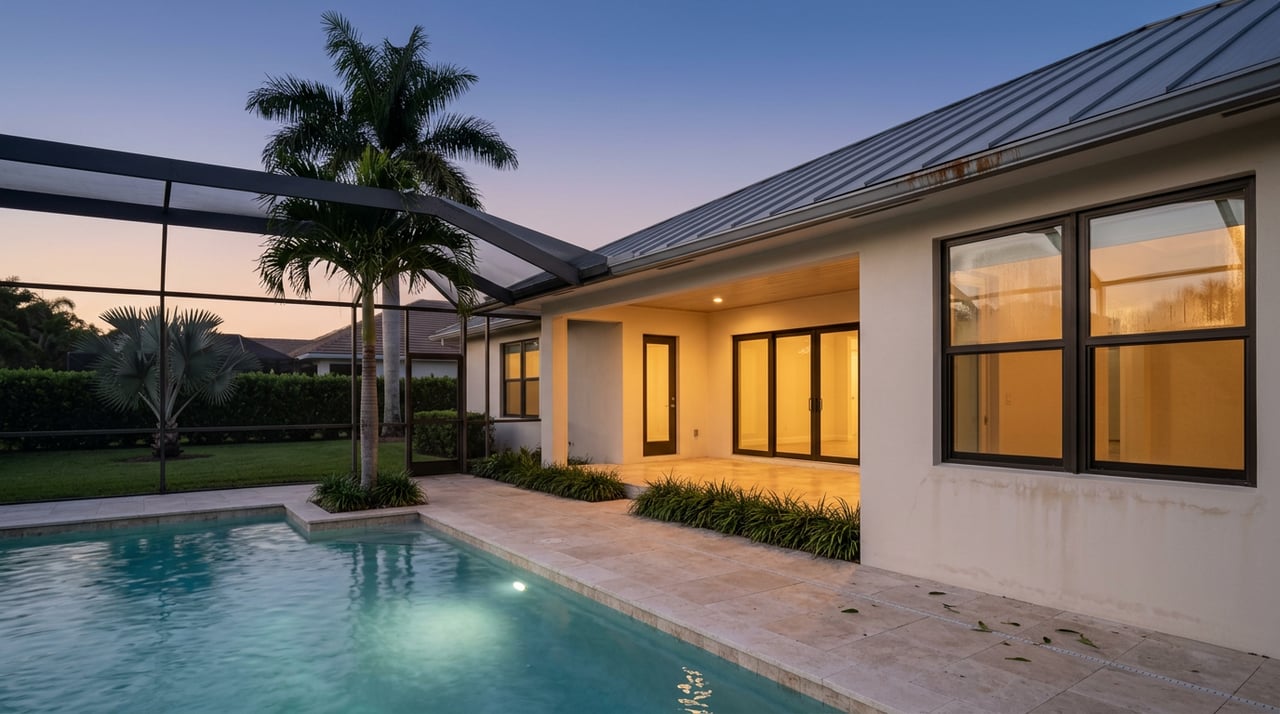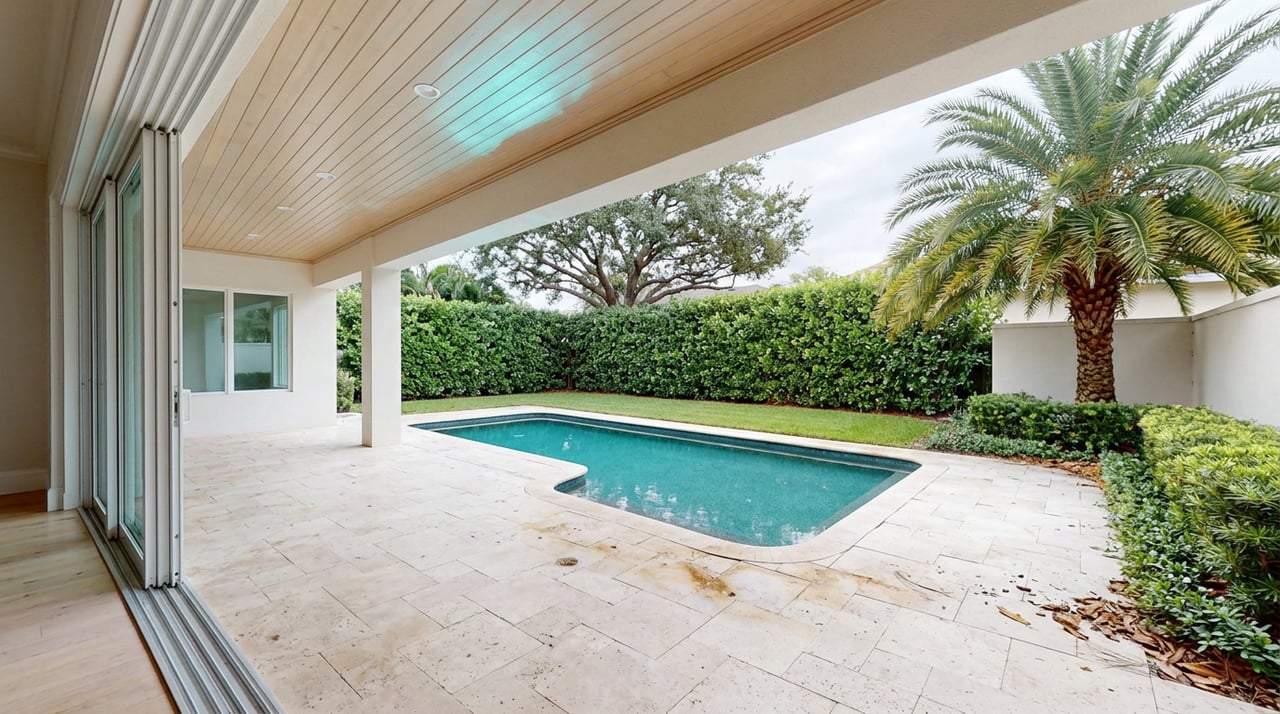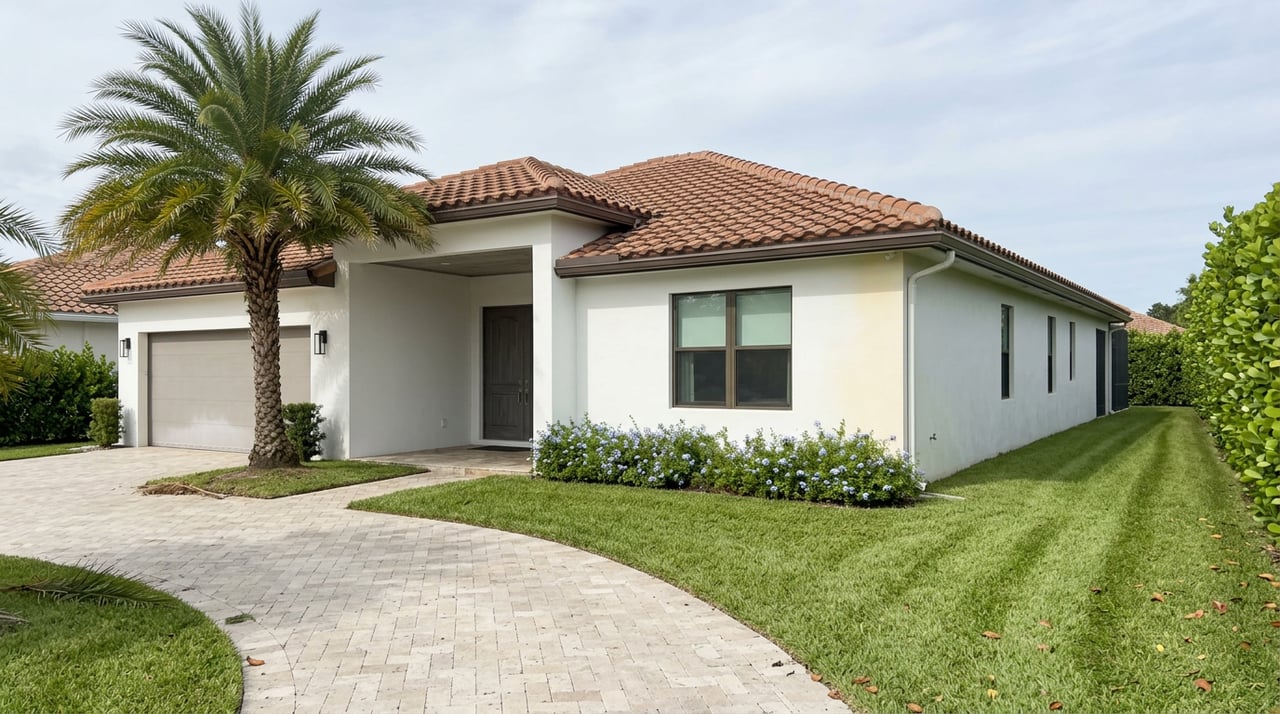
What does a $347-a-month HOA fee actually tell you about what a house in Fort Myers will cost you to keep?
Less than it looks like, if you're comparing Timber Creek's dues to the handful of sibling communities scattered across Lee County's new-construction map, in Fort Myers and just south in Estero. Buyers cross-shopping these gated, resort-style communities built by Lennar, GL Homes, Taylor Morrison, and Pulte tend to line up the HOA dues, see Timber Creek sitting at or near the bottom, and treat that as the answer. It isn't. The HOA statement is only one of two bills a Florida buyer signs up for, and the second one, the Community Development District assessment, doesn't show up on the same page. It shows up months later on the Lee County property tax bill, after closing, after the first mortgage payment, sometimes after the first surprised phone call to an agent asking what it is.
The Bill That Isn't on the Listing Sheet
A Community Development District, or CDD, is a special-purpose local government created under Florida's Chapter 190 statute to finance the roads, utilities, and amenities inside a new master-planned community. The developer borrows against a bond, builds the infrastructure, and then the district collects the debt service back from homeowners as a non-ad valorem line on the property tax bill, separate from the county's regular millage and separate from whatever the HOA charges for lawn care and pool maintenance. It typically runs for 20 to 30 years, until the bond is retired, and it does not show up when you compare two listings' quoted monthly HOA figures side by side.
Timber Creek's single-family HOA dues sat in the $282 to $297 range in its earlier years. By mid-2026, a Fort Myers buyer-fee guide was quoting the community's average closer to $347 a month for single-family homes, the kind of rise typical of an HOA board moving past its startup phase and building real reserves instead of running lean. On top of that monthly number sits a CDD assessment that has run roughly $1,316 to $1,924 a year, depending on which section of the community your lot falls in. Timber Creek is actually served by more than one community development district, including Timber Creek Southwest CDD, which is one reason the CDD line can shift by several hundred dollars from one phase of the same neighborhood to another. The district posts its meeting notices and budget filings publicly if you want to see how the debt service is structured.
Add the two together and a Timber Creek buyer is carrying somewhere between roughly $4,700 and $6,100 a year in HOA plus CDD costs before property taxes, insurance, or utilities. That's a real number. It's just not the number that gets marketed as "the lowest HOA around."
What the Comparable Communities Charge for the Same Trade-off
Line Timber Creek up against three other gated, resort-style communities working the same Fort Myers and Estero buyer pool and the picture changes.
| Community | Location | Builder | Monthly HOA | Annual CDD | What the fee funds |
|---|---|---|---|---|---|
| Timber Creek | Fort Myers, adjacent to Gateway | Lennar | ~$282–$347 | ~$1,316–$1,924 | 17,000-square-foot clubhouse with restaurant and bar, resort and lap pools, splash pad, four tennis courts, four pickleball courts, sand volleyball, indoor basketball, saunas |
| RiverCreek | Estero, off Corkscrew Road | GL Homes | $354 | $1,950 | 12,000-square-foot lifestyle complex, resort-style pool, splash park, four tennis courts, six pickleball courts, two bocce courts, indoor basketball, paired with the strictest rental cap of the group |
| Verdana Village | Estero, off Corkscrew Road | Lennar and Pulte Homes | $352–$372 | $1,670–$2,059 | Indoor and outdoor tennis and pickleball courts, resort-style pool, indoor sports complex, bocce courts, fitness center, full-service restaurant and café |
| Esplanade Lake Club | Fort Myers, off Alico Road | Taylor Morrison, Pulte, Seagate | Not published at the same granularity | $2,567–$3,030 | Private marina on 352-acre Lake Como, boat ramp, dry storage, kayak launch, Bahama Bar & Grille |
A few things fall out of that table once you actually sit with it. Timber Creek's HOA advantage over RiverCreek and Verdana Village is real but small, on the order of $5 to $25 a month, and it mostly evaporates once the CDD gets added back in. RiverCreek and Verdana Village land in roughly the same combined HOA-plus-CDD range as Timber Creek's higher end, once you do the full math rather than comparing the headline dues alone.
Esplanade Lake Club is a different animal entirely, and its fee structure tells you why. Its CDD assessment alone runs roughly double what Timber Creek's does, before any HOA dues are added. That gap isn't arbitrary. Esplanade Lake Club's district financed a private marina, boat ramp, and dry storage infrastructure on a 352-acre lake, hard assets with real construction and maintenance costs that a clubhouse and sports court complex simply doesn't carry. If you're paying more there, you're paying for water access that Timber Creek was never built to offer. That's a legitimate trade, but it's a trade you should be choosing deliberately rather than discovering after the fact.
The Number That Matters More Than the Fee If You're Renting
Here's where the fee comparison actually matters less than something else buried in the same HOA documents: the rental policy.
Timber Creek allows owners to lease their homes up to twelve times a year, with a 30-day minimum stay. RiverCreek, sitting at a nearly identical combined carrying cost and now sold out of new construction homes, restricts owners to renting the home out no more than once every seven months, alongside separate restrictions on flipping for profit. For an owner-occupant, that difference is close to irrelevant. For anyone weighing one of these communities as a seasonal rental or an income property, it's the whole decision. A community charging you an extra few hundred dollars a year in HOA and CDD fees is a rounding error next to a rental cap that limits you to a single booking window every seven months instead of monthly turnover. Read the rental section of the HOA documents before the fee schedule, not after.
Why This Catches Relocating Buyers Off Guard
CDDs aren't unique to Timber Creek. They're common across new-construction communities throughout Lee County, from Fort Myers to Estero. But they are genuinely unfamiliar to a lot of the buyers looking at this market, particularly families relocating from the Northeast or Midwest and Canadian or UK buyers purchasing a seasonal home. A mortgage escrow account set up in a state without CDDs has no line item for one, so the first full property tax bill after closing can look larger than what was quoted during underwriting, not because taxes went up, but because the CDD assessment was already there and just hadn't been folded into anyone's monthly estimate yet.
The fix is simple and it belongs in the offer stage, not after closing. Ask the builder or the listing agent for the exact CDD assessment tied to the specific lot, not a community-wide range, since the figure can vary by several hundred dollars between phases within the same neighborhood. For new construction, this figure is disclosed in the purchase contract. For resale, it shows up on the seller's HOA estoppel documents. Either way, it's answerable before you sign, and it should be part of the same conversation as the HOA dues, not a separate one that happens later.
What This Actually Means for a Timber Creek Buyer
Timber Creek earned its reputation as the value pick among these communities, and on the HOA line alone, that reputation still mostly holds. But the HOA number was never the full carrying cost, and treating it as if it were means comparing communities on the one fee that happens to be printed on the flyer while ignoring the one that shows up on the tax bill. Once you add the CDD back in, Timber Creek, RiverCreek, and Verdana Village land closer together than their marketing suggests, and the real differentiators become the things the listing sheet doesn't headline: what specific infrastructure your CDD dollars built, how many times a year you're allowed to rent the place out, and which phase of the community your particular lot sits in.
A Couple of Questions Worth Asking Before You Sign
Does the CDD assessment ever go away? Yes, once the bond that financed the community's infrastructure is paid off, typically after 20 to 30 years, though the exact payoff date depends on the district's original bond schedule. Until then, it's a fixed obligation tied to the property, not the current owner, so it transfers with the home at resale.
Can I find out my exact CDD amount before making an offer? Yes. For new construction, it's disclosed in the builder's purchase contract. For resale, request the current CDD assessment amount and the HOA estoppel letter from the listing agent before you write an offer. Both documents exist and are meant to be shared with a prospective buyer.
Comparing fee schedules across four gated communities is a reasonable way to spend an afternoon, but it only gets you halfway to knowing what a specific lot in Timber Creek will actually cost you to hold, or whether its rental terms fit what you're planning to do with the property. If you're weighing Timber Creek against comparable communities in Fort Myers and Estero, or trying to figure out what a specific CDD assessment looks like on a lot you've got your eye on, Daza Estates can walk through the actual numbers with you before you're the one finding them on a tax bill. Let's Connect.